Who Cleans the Pavement Outside a London Shop – the Council, the BID, or the Tenant?
Cleaning Tips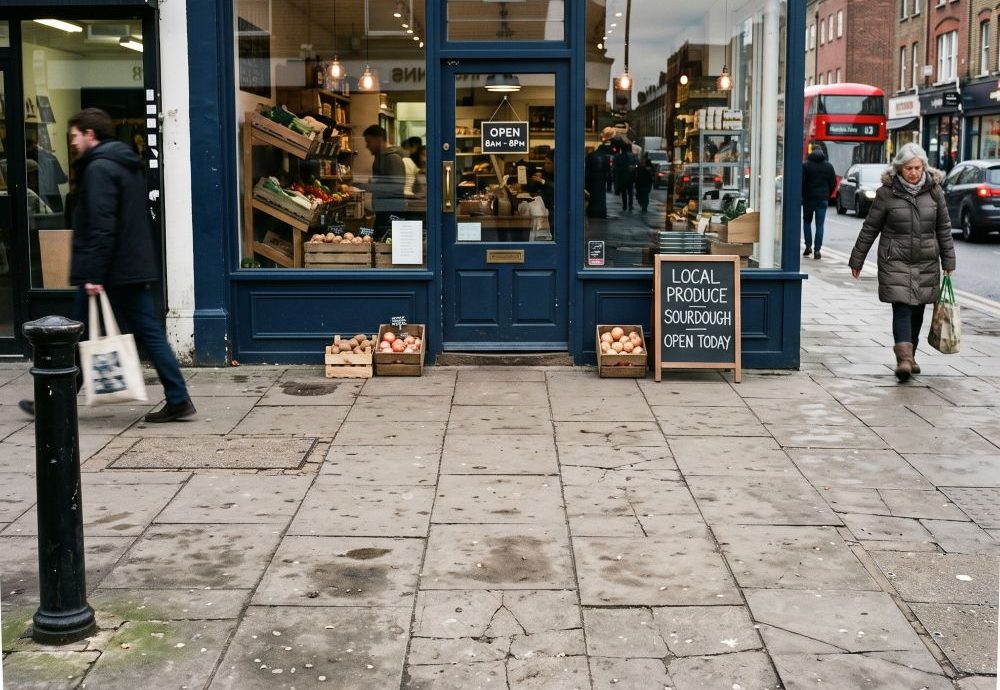
Keep Britain Tidy puts the figure at 99 per cent. That is the proportion of retail sites in England carrying visible chewing gum staining, against roughly 77 per cent of streets generally, which tells you something about where people stand when they decide they have finished with it. They stand outside a shop, looking in the window.
So the question comes up constantly, and it comes up angrily, because the retailer is the only party in the arrangement who has to look at it all day.
Whose pavement is it, in law?
The footway outside almost every London shop is adopted highway, maintainable at public expense, and it belongs to the highway authority. In Lewisham that is the borough. On a red route it is Transport for London as highway authority, though street cleansing on the Transport for London Road Network is generally still delivered by the borough, which is one of those arrangements that makes perfect sense until you need someone to come out.
Under section 89 of the Environmental Protection Act 1990, the council has a duty to keep relevant land and highways clear of litter and refuse. Section 41 of the Highways Act 1980 covers maintenance, which means the structure of the footway – the slabs, the levels, the trip hazards – and not the state of it. Two different obligations, often confused, and a retailer complaining about the surface of the pavement and a retailer complaining about the dirt on it are writing to two different departments.
Where does your demise stop?
Look at the lease plan before you assume anything. A standard high street shop lease demises the internal area to the inside face of the shopfront, and the threshold strip and the frontage beyond it are outside it. Some do not. A parade with a set-back frontage, a recessed doorway, a stall riser sitting behind a private forecourt strip a metre deep – those forecourts are frequently within the demise, and they are the bit that collects cigarette ends against the wall.
If the forecourt is demised to you, nobody else is coming to sweep it.
What is the council obliged to do, and how often?
Less than most retailers assume, and to a defined standard rather than an aspiration.
The Code of Practice on Litter and Refuse sets zone types by intensity of use and grades cleanliness from A down to D, with response times attached to restoring a fallen grade. A busy shopping frontage sits in a high-intensity zone with a short response time. A back service road does not. That is the whole architecture. The council promises to restore a defined grade within a defined window once it drops. Nowhere does it promise you a clean street.
Gum sits awkwardly in that system. Gum staining is bonded to the surface and needs heat, water and a machine. Routine litter picking does nothing to it. Councils treat it as periodic deep cleansing rather than something the morning barrow sweep picks up. Which is why a frontage on Deptford High Street can be swept every day and still look filthy from twenty feet.
Can the council make the cleaning your problem?
It can, and this is the part almost nobody knows about.
Sections 93 and 94 of the Environmental Protection Act 1990 give a council power to serve a street litter control notice on the occupier of premises where litter is a recurring problem in the vicinity. Fried chicken shops, coffee outlets, anywhere with takeaway packaging. The notice defines an area of frontage and requires the occupier to clear it, and non-compliance is an offence. If you are a food business on a busy stretch off Douglas Way, you may find that the pavement question has already been answered for you in writing.
What does the BID levy buy, and where does its remit stop?
A Business Improvement District is a five-year arrangement created under Part 4 of the Local Government Act 2003 and the 2004 regulations, funded by a levy on the rateable value of businesses inside a mapped boundary, voted in by ballot. The defining principle is additionality. Before a BID starts, it agrees a baseline services statement with the council recording exactly what the council already does, so the levy can only buy work on top of that.
In practice, street cleaning is the single most common thing a London BID spends money on: high-vis street teams, a jetting round, and very often a scheduled gum removal programme covering the main retail frontages.
Here is the part that costs me work. Before you commission gum removal privately, find out whether your levy already pays for it. Get the BID’s business plan and its annual report – both are published, both list the cleansing programme, and the good ones give you the actual frequency and the streets covered. Then ring them and ask when your stretch is next scheduled. I have quoted for frontage work three times in the past two years where the BID team was booked to do that exact pavement inside six weeks. Somebody is paying for that twice.
What if you are not in one?
Then say so out loud, because the map matters more than the postcode. A shop on Deptford High Street in SE8 and a shop by Lewisham Shopping Centre a mile and a half south are not in the same position at all, and boundaries follow street numbers, not neighbourhood names. Check the council’s BID page for the boundary map rather than assuming.
If you are outside a BID footprint, the other route is the council’s own gum budget. The Chewing Gum Task Force, established by Defra and run by Keep Britain Tidy, is funded by the gum manufacturers to the tune of up to £10 million across five years, and roughly fifty councils a year apply successfully for a share. Grants land in the region of £20,000 to £30,000 per authority and pay for a targeted deep clean of chosen streets. Councils choose those streets partly on where the pressure comes from. Traders’ associations that write in get picked, because a grant application needs evidence of local demand and a letter is evidence.
Why is gum removal priced by the square metre?
Because the machine time is the cost, and the surface underneath dictates the machine time.
Modern gum removal on a footway uses a pressurised steam or hot water lance, running somewhere around 130 to 150 degrees at the nozzle on a very low water volume, often with a mild softener applied first. An operative gets through a piece in a few seconds once the surface is up to temperature. What catches people out is the density: a heavily stained frontage carries forty to sixty pieces per square metre.
Surface changes everything. Smooth concrete releases gum cleanly. York stone is porous and the gum has soaked into the top few millimetres, so you lift the mass and leave a grey shadow that no amount of further heat will shift without eroding the stone. Asphalt softens under sustained heat and marks. Granite setts hold gum in the joints where the lance cannot reach square-on.
And there is the water. Anything you lift runs somewhere, and on adopted highway that means a surface water drain, so the job needs either a reclaim mat and a wet vac or an agreed disposal route. Contractors who skip that step are cheaper for exactly that reason.
Is the cosmetic result worth buying?
Sometimes. I will say something unpopular here: a great many shopfront pressure washes are bought for the benefit of an area manager doing a store visit, not a customer, and the customer never looked down in the first place. Gum removal on a frontage is worth doing where you have a light stone or a pale concrete that shows every mark, and where the pavement is wide enough that people stand on it. On a narrow, dark, heavily trafficked stretch it will look identical again within four months.
How much of that street ends up on your shop floor?
Most of it. Which is where the money is better spent.
Between 80 and 90 per cent of the soil inside a retail unit arrives on the soles of shoes. That is the single most reliable number in this trade, and it means the condition of your entrance matting has more effect on your floor cleaning bill than the specification of your floor cleaning does.
The matting arithmetic is unforgiving. BS 7953 covers the selection and installation of entrance flooring systems, and the practical rule that comes out of it is that you need enough matting for a person to make three to four full strides on it. That is roughly six metres. Almost every independent shop I walk into on a market day has 900mm of coir at the door, which gives one and a half footfalls and captures a fraction of what arrives.
Deptford has a street market three days a week. On a wet Saturday the frontage carries market grit, vegetable waste trodden flat, and whatever the fried food stalls have dropped, and every bit of that gets carried across your threshold and ground into the vinyl by the sixtieth customer. Replacing that vinyl in four years instead of eight, because there was no barrier matting to protect it, is the same mistake as the gum contract. Somebody is paying for that twice.
What does six metres of matting in fact replace?
A floor restoration, usually.
Six metres of primary matting on a run costs less than one deep restoration of a worn vinyl or a sanded and resealed timber floor, and it goes on working every day for years. The branded logo mat at the door is a marketing purchase. Buy the length first.
And a retailer who pays for a monthly frontage jet wash while running 900mm of coir at the entrance has the whole thing backwards. Somebody is paying for that twice.
The gum will come back. The soil, if you set the matting up properly, mostly stops at the door.